


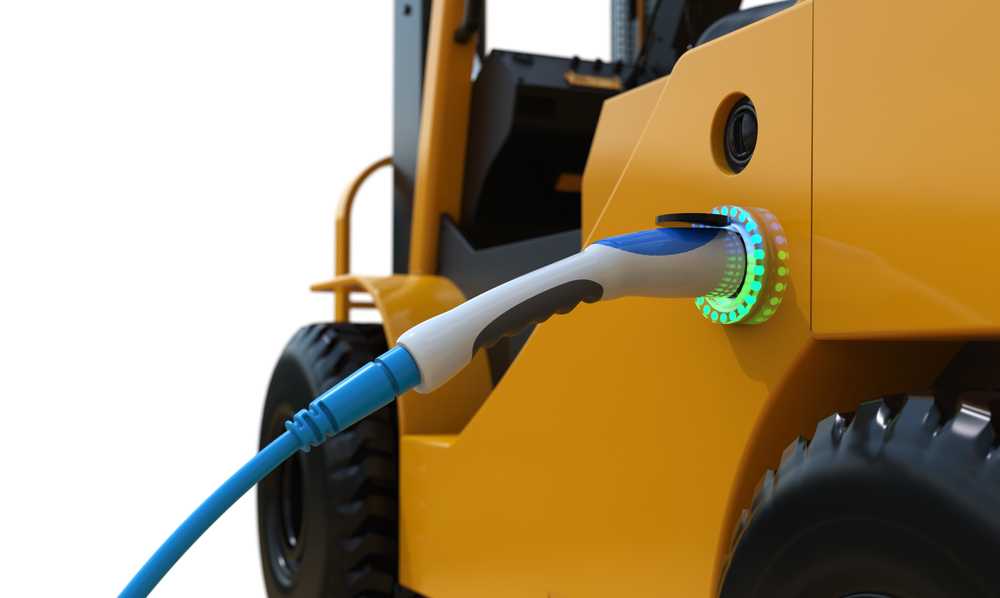
It’s critical to ensure that your forklift fleet is operational throughout the workday to keep the team moving and maintain high levels of efficiency. In fact, electric forklift battery life has a direct impact on uptime, which plays a key role in overall operating costs and profit margins.
If you have a warehouse or large organization that runs multiple shifts, then forklift battery lifespan matters even more. These conditions are where battery limitations are often felt first.
With the right charging habits, forklift maintenance, and the ideal type of battery, it’s possible to reach 3,000+ cycles with your forklift battery. In this article, we are sharing the best tips to protect your battery performance and keep your crews working.
What Battery Life and Charge Cycles Actually Mean
The most important factor that affects forklift battery lifespan is the charge cycle, which is using 100% of the battery’s capacity (all at once or in parts). So, when you are evaluating cycle life for your forklift battery, this number indicates the number of times you can use the full battery before you start noticing a decrease in capacity.
Electric forklift battery life can also be measured by calendar life, which refers to the battery aging over time. This measurement applies even when the forklift is parked and not in use.
Average Lifespan of Electric Forklift Batteries
The lifespan you can expect for your forklift depends on the type of battery that you are using. Also, it’s important to understand how much age and usage patterns will play a role in the durability of the type of battery that is in your forklift.
- Lead-acid batteries typically last 1,200 to 1,500 cycles
- Lithium-ion batteries often last 3,000+ cycles
Even though lithium-ion batteries are more expensive upfront, their longer lifespans often make the investment worth it because you can use the battery for many more cycles. Keep in mind that usage patterns matter more than only the age of the battery.
Lead-Acid vs Lithium Forklift Batteries
Here are a few things to consider and compare when you are choosing a battery for electric forklift use:
- Lead-Acid Batteries: The upfront costs are lower, but these batteries require more maintenance, such as watering, equalization, and battery room infrastructure. Lead-acid batteries are very sensitive to poor charging habits and deep discharge.
- Lithium-Ion Batteries: These batteries are great for crews that need high cycle counts and opportunity charging. Since they deliver consistent power with minimal maintenance, many forklift owners find it worth the higher upfront investment.
Key Factors That Affect Electric Forklift Battery Life
The biggest factor that will cause your battery performance to drop faster than normal is the depth of discharge (the total capacity that has been used). If you frequently drain the battery to the bottom, then it can put stress on the internal chemistry of the battery, which can decrease the number of charge cycles that you have before it starts to lose capacity.
High heat is another factor that can speed up internal wear. Also, if the battery is used for heavy workloads and long shifts (or back-to-back shifts), then it can cause the battery to wear down more quickly.
Charging Habits That Help Reach 3,000+ Cycles
Here are the best tips to maximize the available forklift battery cycles:
- Don’t fully drain the battery, whenever possible.
- If you have a lithium battery, then charge the battery whenever there is a short window instead of waiting for the battery to drain (known as opportunity charging).
- For lead-acid batteries, they perform better with traditional charging (charging the battery when it is drained).
- Only use fast charging when you have a battery system that is compatible with this type of charging.
- For lead-acid batteries, equalization charging is required.
Maintenance Practices That Extend Battery Life
In addition to adjusting your charging habits, there are a few other maintenance things that can be done to protect your electric forklift battery life:
- Lead-acid batteries should always be watered after charging.
- Make sure the battery terminals are clean in order to prevent heat and resistance.
- If batteries are in storage, then they should be kept with a partial charge (not empty or full).
- Use a Battery Management System to extend lithium forklift battery life.
Operational Strategies for Multi-Shift Warehouses
Forklift battery cycles and performance can be more challenging to manage in high-demand environments, such as a warehouse with multiple shifts throughout the day and night. Make sure that natural breaks are used for scheduled charging to keep the forklifts running around the clock. Additionally, smart chargers can be used that make fine-tuned adjustments based on the condition of the battery.
Not only does battery health need to be monitored by unit, but you also need to know battery health across the whole fleet. Also, be careful to avoid overcharging or charging during prolonged idling, because these habits can take a toll on battery life over time.
Signs a Forklift Battery Is Nearing End of Life
If you notice that your forklift battery life is decreasing, then it might be time to consider a replacement before reaching battery failure. Your operators should be watching for the most common signs that battery performance has dropped, such as:
- The forklift doesn’t run as long after charging.
- It takes longer to charge the forklift.
- Charging times are becoming inconsistent.
- When the forklift is carrying a load, the voltage drops.
- The battery is excessively corroded, starting to swell, or getting too hot.
FAQs
Can electric forklift batteries really reach 3,000+ cycles?
Yes, if you have a lithium-ion battery, then it’s possible to get over 3,000 cycles, depending on the way you are charging and using the battery.
Is opportunity charging bad for battery life?
It depends on the type of battery that you are using. Opportunity charging will shorten the life of an acid-lead battery, but it’s an effective method for lithium-ion batteries.
The Forklift Experts are Here to Help
Whether you need a battery replacement or it’s time to invest in a new forklift, our team is just a phone call away. Reach out to us at BullDog Forklifts. Contact the experts to discuss forklift maintenance, repairs, sales, rentals, and more.