


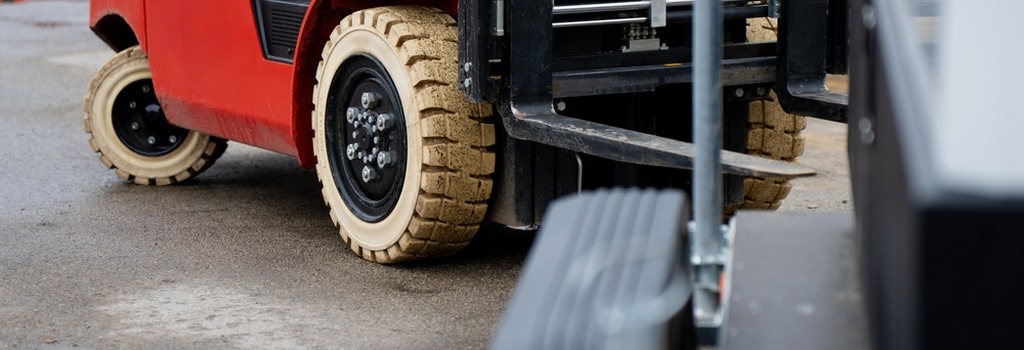
Knowing when to replace forklift tires is not only a budget decision, but it’s an essential step to ensure safety in the workplace. How do you know when it’s finally time to switch out those old tires? There are a few important things to watch for, and a visual check will tell you almost everything you need to know about the tire condition.
Remember that tire replacement is more than maintenance. Keeping good tires on the forklift is an essential practice to protect stability, avoid damage to the loads, and keep your crew safe.
Why Worn Tires Are a Safety Problem
Serious safety issues can develop if a forklift is in use with worn tires. Here are just a few of the safety risks that increase when old, worn tires are still on your forklift:
- Reduced Stability: If the tire treads are smooth, then the machine has less grip on the flooring. Additionally, the reduced size of the tires can result in less stable footing, especially when the operator is braking with a raised load.
- Wear on the Machine: Did you know that worn tires can speed up wear and tear on the rest of the machine? For example, bad tires can cause vibrations and shock that affect both the mast and drivetrain. As a result, some of the most expensive replacement parts have a lower lifespan, which increases your overall costs in the long run.
- Forklift Footprint: The quality of the tires has a direct impact on the machine’s footprint. When the tires are worn, it changes how the truck is sitting while under load. For example, a fully loaded forklift might be able to stop easily with new tires. But older tires won’t respond as quickly in the same conditions.
Pay Attention to the Forklift Tire Safety Line
As part of your routine forklift inspections, make sure to have a checklist item that evaluates the forklift tire safety line. If your forklift is running on solid, press-on cushion tires, then there is a molded wear line located on the side of each tire. When you see that the rubber is worn down to this point, it means that the tire is no longer safe, and it should be replaced immediately.
On the other hand, pneumatic tires are a bit different. In this case, you will need to compare the tread depth with the manufacturer’s recommendations. Also, pneumatic tires should always be replaced if you can see that the sidewall is cut or the cords are showing.
Forklift Tire Wear Signs to Watch for in Daily Inspections
Daily inspections are the best way to identify signs of tire wear in the earliest stages. Not only are inspections required at the beginning of every shift, but these checklists are also important for protecting your crew and loads.
Watch for these common signs so that you know when to replace forklift tires:
- Forklift tire chunking and cracking, such as missing pieces from the tread or cracks anywhere on the tires.
- Flat or bald spots are visible.
- Unusual vibrations when the forklift is in operation.
- Uneven wear on one side of the tire, which often indicates a load or alignment issue.
- The tire rubber is starting to separate from the rim.
- Low or inconsistent tire pressure (for pneumatic tires)
Cushion vs. Pneumatic Tires: How to Choose the Right Tires
Your decision between cushion tires and pneumatic tires comes down to the type of environment where the forklift is running.
- Smooth, Indoor Floors: If your forklift will always be operating in indoor conditions, then cushion tires are typically the way to go. With these tires, keep an eye on the safety loss to determine the tread wear progression.
- Rough, Outdoor Surfaces: If you are using the forklift outdoors or on rough surfaces, then pneumatic tires are usually the better option. Pay attention to tread depth and tire pressure, as well as any visible signs of damage such as cracks or cuts.
What Happens If You Wait Too Long to Replace the Tires
Whether you have a busy schedule or you decide to delay tire replacement to stretch the budget a little more, there are serious risks that can develop if you keep running a forklift with worn tires. Tire maintenance should be a priority to ensure the safety of everyone in the area.
The biggest risk you are taking by waiting too long to replace the tires is that the risk of tip-overs and accidents increases. Old tires also increase the risk of damage to the mast, drivetrain, and forks.
Even though you might think that you are saving money by using the tires a little longer, these worn tires could potentially cost you more money in the future. So, it’s worth the investment to switch out the tires when they are old and need to be replaced.
The best practice is to add tire checks to all pre-shift inspections so that wear gets caught as soon as possible. Also, plan your tire replacement schedule based on the number of hours in operation, the type of load, and the floor surface where the forklift is driving. For example, a light-duty indoor forklift can go a lot longer between tire replacements compared to a multi-shift truck that is always running on rough concrete.
FAQs
How many forklift tires should I replace at once?
At a minimum, forklift tires should be replaced in pairs on the same axle. It’s common for the drive tires to wear out more quickly since they are turning and carrying the load weight.
How often should forklift tires be inspected?
Every pre-shift inspection should include a check of all four forklift tires. Also, technicians will check the tires during regular servicing.
Same-Day Forklift Tire Replacement in DFW
Whether you have an urgent situation and need immediate tire replacement, or you are wondering when to replace forklift tires proactively, our team at BullDog Forklifts is here to help. Our technicians are always just a phone call away and ready to help with on-site tire replacement and servicing. Contact us today for more information about available services.