


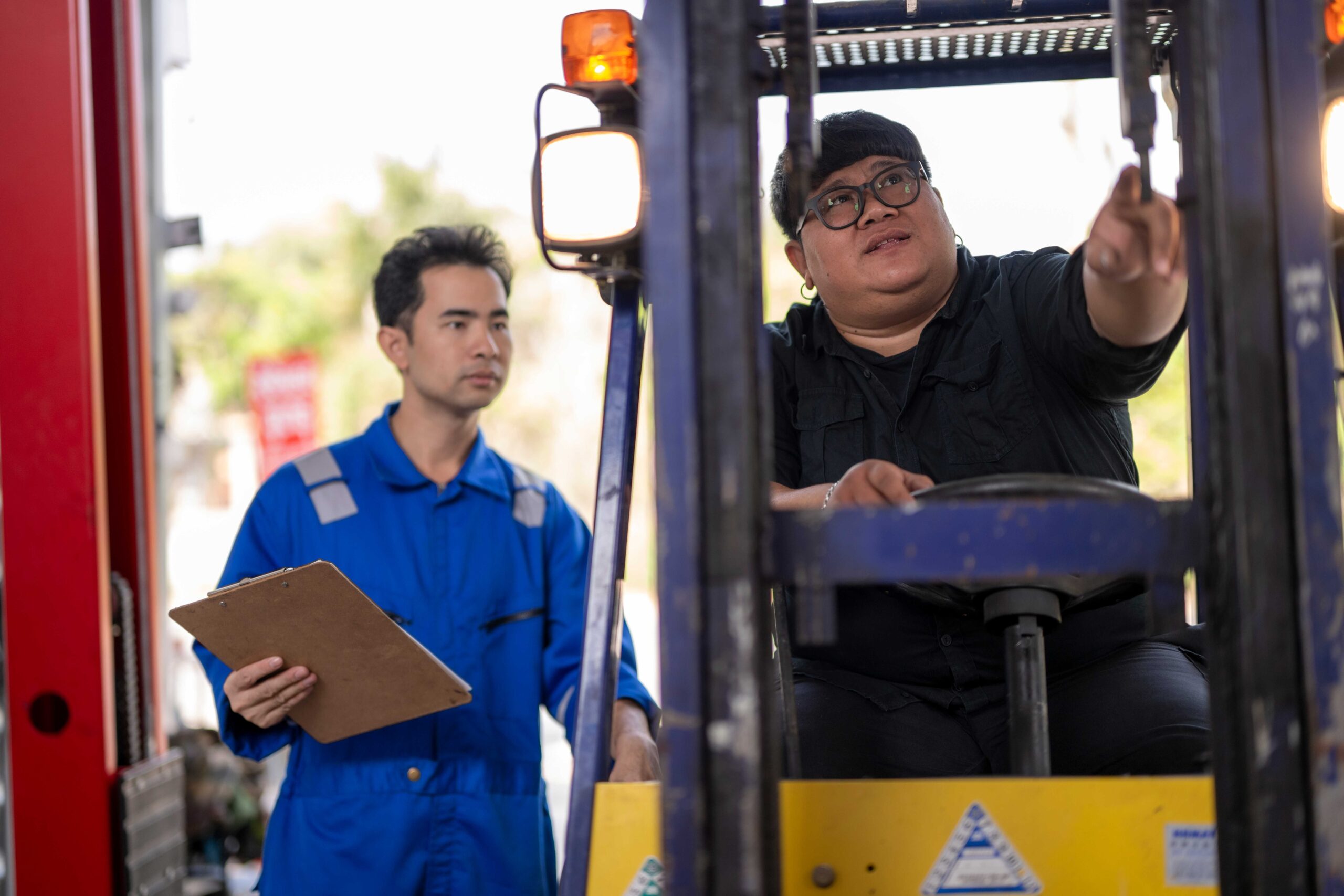
When you are operating heavy machinery in a warehouse or on a job site, operator certifications are more than just a suggestion. In fact, certain forklift operation certification requirements must be met; otherwise, you might face fines and penalties under OSHA’s workplace safety guidelines.
So, before you bring a forklift on site and put an operator in the driver’s seat, you need to know about the necessary certifications and training that must be in place so that you are maintaining compliance every step of the way.
Why Forklift Operator Certification Isn’t Optional
According to OSHA’s standard (29 CFR 1910.178), formal instruction and hands-on practical training must be done before a person can operate a forklift. At the end of this training, each operator needs to successfully pass a workplace-specific evaluation.
Not only does operating a forklift without certification pose a serious safety threat in your workspace, but you could also be exposing your business to OSHA fines. Other issues can stem from an uncertified operator using the equipment, such as your insurance coverage being voided, which puts you in a place of liability if there is an accident.
It’s critical that you only have certified operators using your equipment, not only to reduce your legal exposure, but also to avoid unnecessary accidents in the workplace. If the person behind the wheel hasn’t gone through formal training and evaluation, then there is a much higher risk of serious accidents and injuries: tip-overs, dropped loads, and even collisions with racks, pedestrians, or other vehicles.
Who Needs to Be Certified and Evaluated?
Both new hires and experienced operators need to go through training and evaluations. If you are bringing a new hire onto the team, then always make sure they have completed an OSHA forklift certification in Texas before they can operate the equipment without supervision. Additionally, experienced operators must go through a workplace evaluation specific to the type of equipment you are using and the conditions of the job site.
Keep in mind that forklift certification varies depending on the type of equipment, which is why you need to check which type of forklift operator training in DFW the person has completed. For example, just because an operator is certified for a sit-down counterbalance forklift, it doesn’t mean that they are trained to use an order picker or stand-up reach truck.
These certifications must be tracked, especially if your crew is running a mixed fleet. It’s important that certifications are tracked by machine and employee to ensure that you are always maintaining compliance when a forklift is in use.
3-Part Process for Forklift Certification
OSHA-approved forklift certifications are always completed in three stages:
- Formal Instruction: This training can be offered through an in-person class or an online experience. The trainee learns about load capacity, stability, and general operating principles that need to be followed. For example, every operator needs a clear understanding of how the load center and mast height affect the weight that can be safely lifted by each forklift.
- Practical Training: Once the formal instruction is complete, it’s time for hands-on training. New operators need real-world experience behind the wheel so they can learn how to maneuver and stack safely. This stage of training must be done under supervision at all times.
- Evaluation: Now it’s time for an evaluation that is specifically designed for your workplace conditions. This step ensures that the operator will be able to handle the layout of your site, including any surfaces, ramps, and racking that need to be navigated. Just because an operator has a certification from another facility, it doesn’t automatically transfer to your job site.
How Long Does Forklift Certification Last, and When to Renew?
OSHA has a 3-year rule in place for forklift certifications, which means that every operator must renew their certs regularly. But if an operator is involved in an accident or a near-miss, then the incident should trigger earlier retraining as needed. Additional training is always required if an operator is observed using the equipment in an unsafe manner.
It’s also necessary for an operator to go through training again if there is an equipment change. For example, if you switch the forklift out for a different class or type of equipment, then every operator needs to be trained on this specific equipment that is coming onto the job site.
Also, businesses should take a proactive approach with training if there are any changes in the worksite conditions. For example, if new racking is installed or there is a different hazard in the area, then the forklifts should not be used before operators receive the proper training for the current conditions.
In-House Training vs. Third-Party Certification
If you choose in-house training, then the trainer needs to have the proper knowledge, experience, and evaluation skills in order to oversee this training. It’s not enough to have someone complete the training just because they have previous forklift experience themselves.
A safer and more effective solution is to use third-party certification programs so that your team doesn’t need to carry the documentation and liability burdens. Using an outside certification program ensures that the training aligns with OSHA requirements. This approach minimizes the risk of training gaps that could be uncovered during an incident or audit.
FAQs
Is forklift certification required by law in Texas?
Yes, all businesses in Texas must meet federal OSHA standards, including forklift certification requirements. Regardless of the size of your company, all operators using powered industrial trucks must complete proper training and certification.
How long does forklift certification last before it needs renewal?
The standard rule under OSHA requirements is that forklift certification lasts for 3 years. But if there is an accident, a near-miss, or a change in equipment, then earlier retraining is required.
How BullDog Forklifts Supports Operator Compliance
Our team at BullDog Forklifts offers full-service support for every customer. We’ll help you understand the forklift operator certification requirements for both rentals and purchases, ensuring that your team is always in compliance.
If you have questions or need help with certifications and training in the DFW area, we invite you to reach out to us for more information. Contact us for personalized recommendations from a professional team that you can trust.