


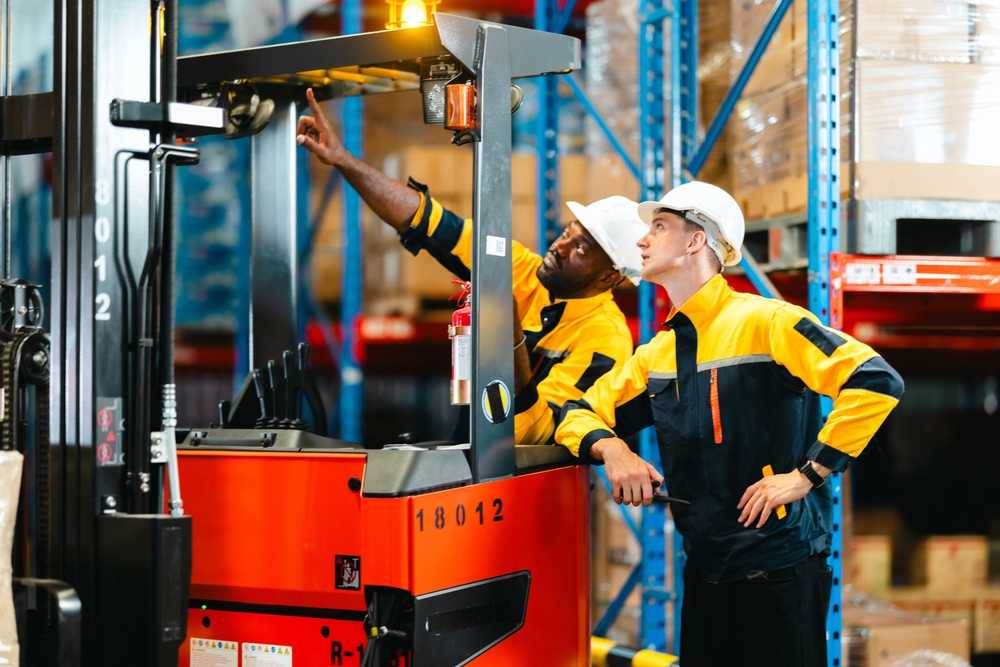
According to OSHA guidelines, forklifts must always be inspected before every shift, regardless of the fuel type or the way the forklift is being used. Even though there isn’t a specific form that should be used for the inspection, it is required that these inspections happen. The best practice is to have a forklift pre-shift inspection checklist so that potential issues are flagged as soon as possible.
If the inspection identifies any problems with the forklift, then it must be removed from service until it is repaired and safe to use. Not only does skipping the inspection process increase the risk of accidents and injuries, but it could also put your organization at risk of fines and penalties. This inspection process only takes 5 minutes, but it is an essential step that must be followed at the beginning of every shift.
The Two Phases of a Daily Forklift Inspection Checklist
Whether you are using your own checklist or an OSHA forklift inspection checklist, there are two distinct phases that need to be included in the inspection process: first, a visual inspection, followed by an operational test.
Phase 1: Visual Inspection (Key OFF)
This visual inspection can uncover potential issues that require repair or maintenance. Some of the visual inspection steps should include:
- Check for fluid leaks by looking under the forklift, including oil, hydraulic fluid, and coolant. Don’t operate the forklift if you can see any fluid leaks.
- A tire inspection is needed to see if there are any potential signs of wear, such as chunking, cuts, or inflation issues.
- Complete a visual examination of the mast, chains, and carriage to check for signs of cracking, fraying, or any other type of visible damage.
- Look at the data plate to make sure that the information is legible, ensure that the seatbelt is functioning, and double-check to see that the overhead guard is intact.
- If you have a propane forklift, check the mounting for the LP tank and hose connections.
- If you have an electric forklift, inspect the battery connectors and cables.
Phase 2: Operational Test (Engine Running)
Once the equipment passes the visual phase of the daily forklift inspection checklist, then you can move to the operational tests. Some of the most important tests in this phase include:
- Before moving the forklift, test the horn, lights, and warning systems.
- Test the mast operation to make sure that it is running smoothly. Move the operation through full cycles of a full lift, lower, tilt, and sideshift.
- Make sure that the brakes are working properly (both the parking brake and the service brake).
- Listen to the engine while it is running and the hydraulic system while it is moving. If there are any unusual noises, then further inspection and diagnosis are needed.
- Check the steering response and make sure that the forklift is tracking straight with light movement.
Different Requirements by Fuel Type: OSHA Forklift Inspection Checklist
While portions of the forklift pre-operation inspection checklist are the same for all types of forklifts, there are a few adjustments that are needed based on the fuel type being used to power the forklift.
- LP Gas/Propane Forklifts: An LP gas forklift inspection checklist should always include an inspection of the gas tank for damage, and also make sure that it is seated correctly in the cradle. The tank should always be mounted securely. Look at the fuel hose and regulator connections to notice if there are cracks or signs of wear. Make sure that the tank shutoff valve is functional. If there is a leaking propane connection, then the forklift must be taken out of service immediately.
- Electric Forklifts: Inspection for an electric forklift should include testing the battery water level, the condition of the connectors, and the quality of the cables. Look for any signs of corrosion or heat damage, especially at the battery terminals. Pay attention to the battery charge level at the start of the shift and have a charging schedule in place to protect battery life. For example, running the battery to full depletion often can have a negative impact on the useful life.
- DC/IC Forklifts: Start by checking the engine oil level, coolant, and the condition of the air filter. Also, the exhaust system needs to be checked. Even though diesel forklifts are usually only used in outdoor environments or places that are well-ventilated, if the exhaust system is compromised, then it could pose a potential safety concern.
What Happens When a Forklift Fails the Forklift Pre-Operation Inspection Checklist
If a safety issue is detected during the pre-shift inspection, then the forklift must be tagged immediately, and the equipment needs to be removed from service. This tag-out must stay in place until a qualified technician has completed an inspection and cleared the forklift to be used again. There is no temporary workaround to this process.
Also, every inspection must be documented with details such as the date, shift operator name, unit ID, and the result of each item on the forklift pre-shift inspection checklist.
FAQs
Does OSHA require forklift inspections before every single shift?
Yes, every forklift must go through the inspection process at the beginning of every shift. For example, if the machine is used in two shifts during the same day, then two separate inspections must occur.
What should I do if my forklift fails its pre-shift inspection?
The forklift should be tagged out if it doesn’t pass every point on the pre-shift inspection checklist. The equipment needs to be removed from service and out of operation until a qualified technician repairs, documents, and clears the forklift to be used again.
How long should forklift inspection records be kept?
The standard practice is to keep forklift inspection records for three years, but there is no standard OSHA requirement for the length of time that the records must be kept.
Call the Forklift Experts for Repair and Maintenance Services
Whether you need a new forklift or you have questions about maintenance and repair, our team at BullDog Forklifts is always here to assist. For more information about available products and services, contact our team today to discuss your needs.