


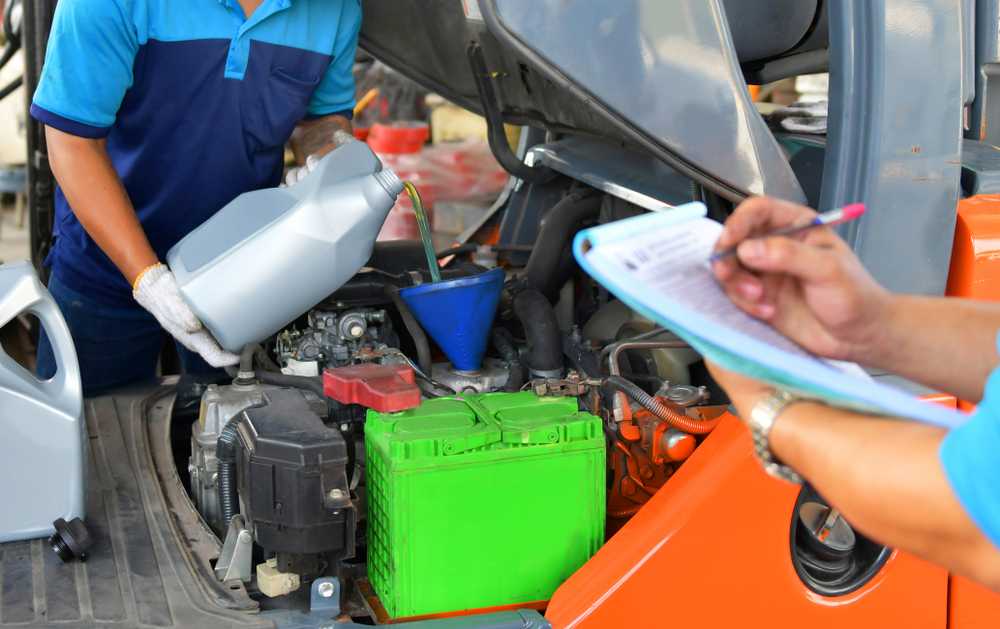
Not only does skipping forklift servicing put your crew at risk due to safety concerns, but it can also cost more money in the long run. Over time, a neglected forklift wears down, and what should have been a scheduled service turns into an emergency repair.
How often should a forklift be serviced? It depends on the type of forklift that you have and how it is being used. In this article, we are breaking down details about the best timing for your forklift maintenance schedule, as well as important signs that mean you need immediate servicing.
How Often Should a Forklift Be Serviced?
Regardless of the type of forklift that you have, a pre-shift inspection must happen every day because of OSHA safety requirements. This inspection needs to happen before the forklift goes into operation and is required for every machine.
Here are the general recommendations for the timing of preventive forklift maintenance, based on the type of equipment you are using:
- IC (Propane or Diesel) Forklifts: Servicing is required every 200-250 hours, which works out to be about every 6-8 weeks if you have single-shift operations. For double shift operations, you’ll reach the 200-hour mark within about 3 weeks.
- Electric Forklifts: A forklift powered by electricity can go a little longer between servicing because there are fewer fluids. Schedule forklift servicing and maintenance every 250-500 hours because the battery, electrical, and brake systems still need attention.
Your Checklist: The Complete Forklift Maintenance Schedule
Follow this forklift inspection frequency and keep up with required servicing and maintenance, and you can expect your forklift to have a long-lasting life.
- Every Shift (OSHA-Required Pre-Shift Inspection): With the motor off, check the fluid levels, tire condition, any signs of damage on the fork and mast, and safety decals. Then turn on the motor and check the horn, lights, brakes, steering, lift function, and warning indicators. If you find any issues, then they must be documented, and the forklift needs to be removed from service until it has been repaired.
- Every 200–250 Hours (Full IC Service): At this interval, your forklift needs a more thorough inspection. Check the engine oil and filter, fuel filter, and clean the air filter. Also check the hydraulic fluid, brake and steering function, mast lubrication, chain, and carriage.
- Every 500-1,000 Hours (Intermediate and Deep Service): This is the point where you need to be proactive about forklift maintenance and servicing. Often, the hydraulic filter needs to be replaced. Also, inspect the transmission fluid and the full drivetrain. It’s likely that the forklift also needs a brake adjustment and fuel system cleaning.
- Every 2,000 Hours (Annual Major Service): Every forklift needs in-depth servicing, such as a full engine tune-up, replacement of the hydraulic fluid, and transmission service. You must have a comprehensive inspection of all safety systems as well as load capacity verification. Make sure to keep updated maintenance records on file.
How Often Should an Electric Forklift Be Serviced?
Since electric forklifts don’t have the same maintenance requirements as a gas-powered forklift, the servicing and maintenance schedule is a little simpler. Full servicing is only necessary every 250-500 hours. Even though it is less frequent than IC forklifts, this maintenance schedule is still just as important.
One of the most essential steps in electric forklift maintenance is to care for the battery:
- Weekly: Check water levels.
- Monthly: Clean battery terminals.
- Every Service: Always inspect all cables.
Signs Your Forklift Needs Service Right Now
Not only do you need to know how often should a forklift be serviced, but it’s also important to watch for any signs that your forklift might need immediate servicing. If there’s something wrong with the forklift, then it should be taken off the floor immediately and repaired before returning to service again. Here are some of the most common signs your forklift needs service immediately:
- Unusual noises, such as knocking, grinding, or squealing, while in operation.
- You find visible fluid leaks under the forklift.
- The mast movement seems jerky or sluggish, which is an indication of hydraulic pressure problems.
- The forklift pulls to one side while driving.
- There is a sudden drop in fuel efficiency or the battery’s ability to hold a charge.
- Warning lights or error codes are illuminated on the dashboard.
- You can see visible cracks, bends, or wear on the fork or mast components.
The Consequences of Skipping Forklift Maintenance
You might be facing serious consequences if the forklift maintenance schedule isn’t prioritized. In fact, it can cost a lot more money in the long run if you aren’t consistent about keeping up with servicing and maintenance.
Poor maintenance can result in unplanned breakdowns that not only disrupt your team’s productivity, but the emergency labor and parts can cost as much as 3-5x more than scheduled servicing. Additionally, delaying the maintenance can void manufacturer warranties, which might cost you more in repair costs in the future. Overall, wear and tear is accelerated if you aren’t keeping up with regular maintenance.
Some of the most expensive costs stack up because of OSHA fines. A single violation starts at $15,625 per citation. Repeat violations get much more expensive and can be as high as $156,259.
FAQs
Does a dusty environment affect forklift inspection frequency?
Yes, if the forklift is operating in a dusty or dirty environment, then you will need to inspect and maintain the forklift more frequently. Chemical exposure and heat also increase the need for more frequent servicing because of the toll they take on the engine.
What happens if a forklift fails its daily inspection?
If a forklift doesn’t pass the daily inspection, then it should be removed from operations until the repairs are complete.
Keep Your Forklift Running at Peak Performance: BullDog Handles It All
Not only does a well-maintained forklift run longer, but you also have the peace of mind in knowing that you are meeting OSHA compliance requirements. Our team at BullDog Forklifts is here to assist with everything from scheduled maintenance to emergency servicing and more.
We offer full servicing for our rental forklifts, as well as ongoing maintenance and servicing plans for customers who own their forklifts. When repairs are needed, our technicians will come to your location to take care of these issues as quickly as possible so that you can get the forklift back into operation again.
Contact us today to learn more about forklift maintenance and servicing. We also offer forklift rentals and sales, giving you a one-stop location for all of your forklift needs.